

7 Reasons People Are Throwing Out Their Plastic Body Wash Bottles and Switching to Plastic-Free Aluminum in 2026
Drugstore body wash bottles aren’t recyclable in most US municipalities. “Natural” body washes still hide synthetic fragrance behind one word. There’s exactly one approach that’s earning the loyalty of clean-beauty veterans this year.

Drugstore body wash bottles aren’t recyclable in most US municipalities. “Natural” body washes still hide synthetic fragrance behind one word on the label. Plastic packaging cracks, leaches, and outlives your grandchildren in landfills. There’s exactly one body care approach that has earned the loyalty of sustainability-focused households, sensitive-skin sufferers, outdoor enthusiasts, and clean-beauty veterans over the last three years: plastic-free aluminum bottles, paired with formulas built from genuine essential oils.
Here’s why the swap is happening right now.
“Fragrance” on a body wash label hides up to 60 undisclosed ingredients.
Federal law allows personal care brands to list “fragrance” or “parfum” as a single ingredient on a label — even if that one word represents a cocktail of dozens of synthetic aroma chemicals, some of which are linked to allergies, hormone disruption, and reproductive issues. The Environmental Working Group has flagged synthetic fragrance as one of the top three ingredient concerns in personal care for over a decade.
A body wash scented with INCI-listed essential oils — Texas cedar oil, sandalwood wood oil, juniper Mexicana oil — has zero hidden ingredients. What’s on the label is what’s in the bottle.
Aluminum is infinitely recyclable. Plastic isn’t.
A glass bottle can be recycled. An aluminum bottle can be recycled. A “recycled plastic” bottle, once it ends its second life, almost always ends up in a landfill — recycled plastic loses fiber integrity each cycle and downgrades to lower-grade applications until it’s no longer recyclable at all. Aluminum doesn’t do that. The aluminum can you recycled today could become a body wash bottle, a window frame, or a bicycle within six months — and then be recycled again, with no quality loss. Switching from plastic to aluminum is the single highest-impact packaging swap in personal care.
Mass-market body washes strip your skin barrier.
Most drugstore body washes use sulfates (sodium lauryl sulfate, sodium laureth sulfate) as the primary cleanser. Sulfates are exceptional at producing thick, satisfying lather — and exceptional at stripping the lipid layer that protects your skin from environmental damage. Users who switch from sulfate-based formulas to gentle coconut-derived surfactants typically report less dryness, less post-shower itchiness, and reduced reliance on body lotion within two weeks.
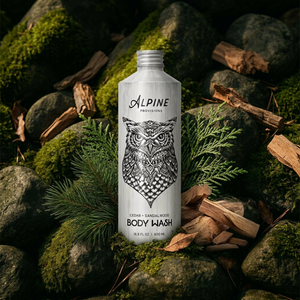
Cedar + Sandalwood Body Wash
Sulfate-free. Mountain-sourced essential oils. Plastic-free aluminum. From $24.
Shop Cedar + Sandalwood →Essential oils are aromatherapy. Synthetic fragrance is not.
Real essential oils — cedarwood, sandalwood, sage, lavender, rosemary — are extracted from plants and contain bioactive compounds with documented effects on mood, alertness, and stress response. Synthetic fragrance compounds are engineered to smell like those plants without containing any of the bioactive properties. A body wash scented with real cedar essential oil delivers a calming, grounding aroma experience backed by aromatherapy research. A body wash scented with “cedar fragrance” delivers a smell — and that’s it. The difference shows up in how a 12-hour day feels at the end.
One aluminum bottle lasts longer than you expect.
A 16.9-ounce concentrated body wash, used at one pump per shower, lasts most users 6–8 weeks. Paired with a reusable dispenser pump, the bottle becomes a permanent fixture in your shower — refilled rather than replaced. Compare that to a mass-market 12-ounce plastic bottle that lasts roughly 4–5 weeks and gets thrown away at the end. Over a year, the household running a refillable aluminum bottle uses 6 bottles. The household running plastic mass-market bottles uses 10–12. Same shower routine. Half the packaging waste.
Certified organic ingredients are actually verifiable.
“Natural” is not a regulated term. Any brand can put it on a bottle. “Certified Organic,” in contrast, requires USDA verification — third-party audits, ingredient-source documentation, and ongoing compliance reviews. When a body wash lists certified organic ingredients with the asterisk on the label, that’s a verifiable claim, not a marketing word. The shift to certified organic herbal extracts (lavender flower extract, chamomile flower extract, white tea extract, arnica flower extract) on top of the essential oil scent profile is one of the clearest signals that a brand’s “natural” claim is more than packaging design.
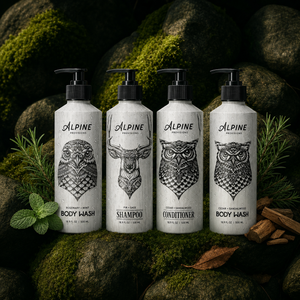
The Explorer Variety Bundle
Try all three scents across body wash, shampoo, conditioner. $89.00 (was $108).
Shop The Explorer Bundle →Buying from a founder-led brand backs a real mission.
When you buy from a private-label drugstore brand, your dollars go to a holding company that contracts the formula to a third-party manufacturer and runs the marketing through a media buying agency. When you buy from a founder-led brand like Alpine Provisions, your dollars go to a real person with a verifiable reason for building the company in the first place. Joshua Onysko founded Alpine to fund Outward Bound wilderness scholarships for disadvantaged kids — 1% of every bottle sold goes directly to that fund. That’s not a marketing line. It’s a documented financial relationship with the Colorado Outward Bound School. Every shower you take is a few dollars closer to a kid in a Denver public school standing on top of a real mountain for the first time.
Explore the Alpine Provisions System.
Body Wash, Shampoo, and Conditioner across four mountain-sourced essential oil blends. Single bottles from $24. Starter bundles from $65.
PLASTIC-FREE ALUMINUM · 1% TO OUTWARD BOUND · FREE SHIPPING OVER $60